


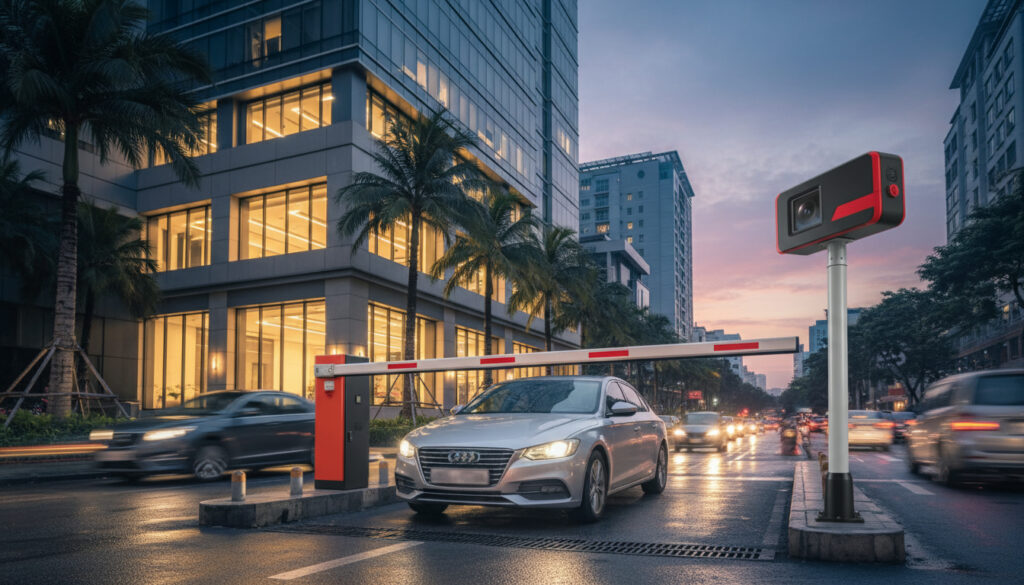
The G-Parking smart parking system cut gate entry time at an office tower from about 45 seconds to 3 seconds per car. It does this by replacing handwritten plate numbers and paper tickets with licence plate recognition (LPR) cameras, and replacing cash with VietQR bank payments. The figures come from a building in District 1, Ho Chi Minh City, with 200 cars a day, after one month in operation.
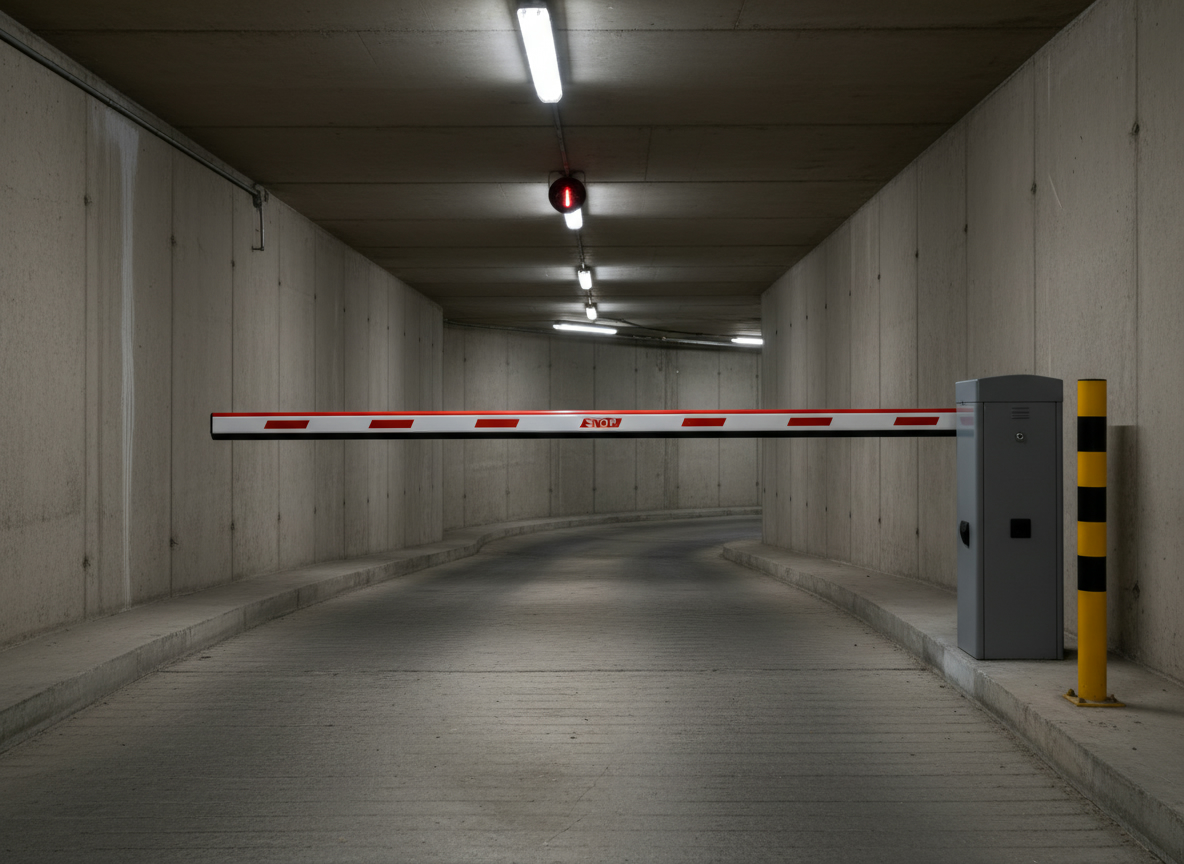
Where does a manual car park lose time?
The barrier itself opens quickly. Time is lost in the human steps. A car stops at the gate, the guard writes the plate number in a book and hands over a paper ticket, about 45 seconds per car. At rush hour around 60 cars arrive within 30 minutes, so the queue spills onto the street.
Leaving is slower still. The guard calculates the fee, takes cash, and hunts for change when a driver hands over a 500,000 VND note, adding about 90 seconds per car.
How does G-Parking handle a car entering?
An LPR camera before the gate captures the plate while the car is still slowing down, and the software reads it in under a second. The system checks the plate against registered vehicles:
- Monthly pass holders from tenant companies: the barrier opens and the car barely needs to stop.
- Visitors: the gate screen shows a welcome, the barrier opens and the clock starts against that plate.
On the way out, the camera reads the plate again, calculates the fee and opens the barrier once payment is done.
Why not make visitors install an app?
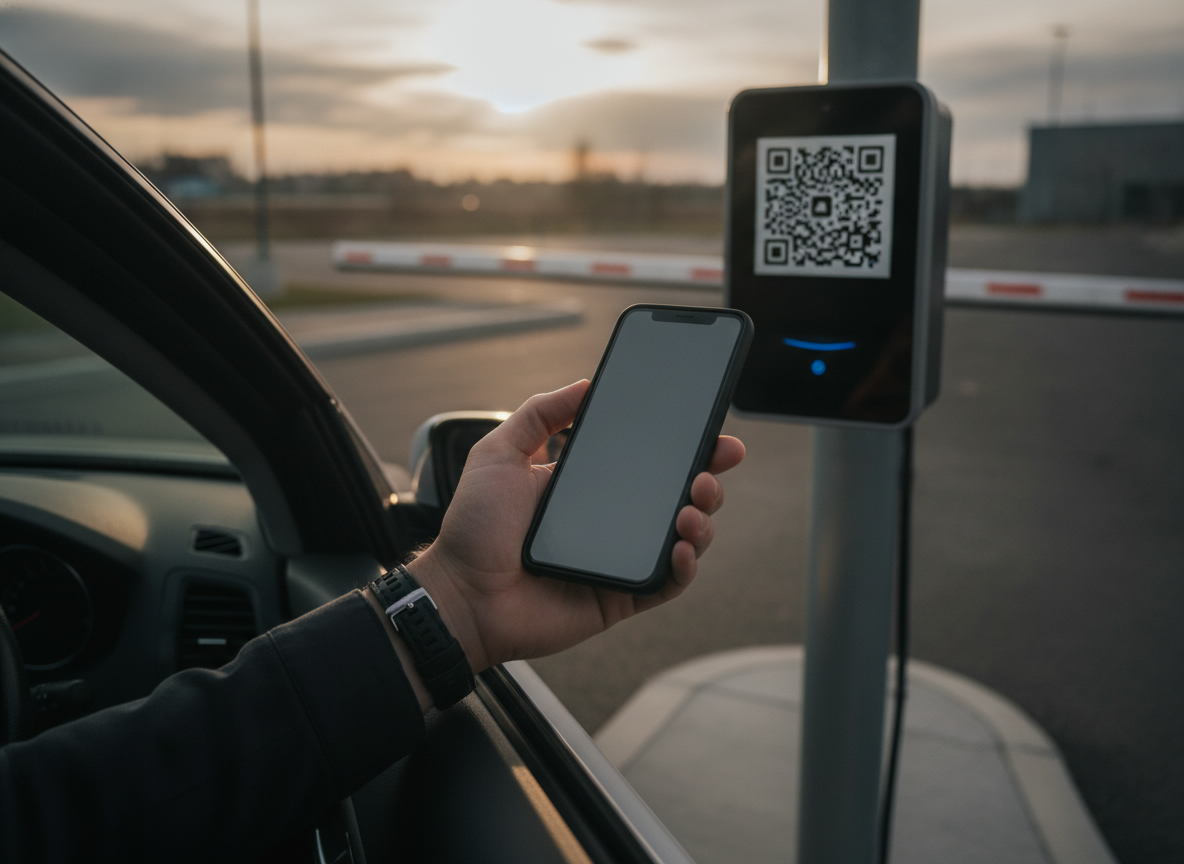
Visitors pay with a VietQR code shown on the gate screen. Any banking app that supports VietQR can scan it, so there is nothing to install. According to NAPAS, nearly 90 million mobile banking accounts were using VietQR scanning by October 2025 (Thi truong Tai chinh Tien te).
Tenant staff can use the G-Parking app to view their history, buy a monthly pass and prepay, but the app is optional.
What were the results after one month?
At the District 1 office tower, with 200 cars a day, after one month on G-Parking:
- Average entry time fell from 45 seconds to 3 seconds.
- Rush-hour queues at the gate disappeared.
- 2 gate guards moved to patrol duty.
- Tenant complaints about parking dropped to zero from the second week.
Is VietQR reliable enough for a car park?
VietQR runs on NAPAS’s fast transfer network. NAPAS reports that its system ran with 99.997% continuous availability in 2025, and that VietQR transfers grew more than 52% by volume in the first ten months of 2025 compared with the same period a year earlier (Thi truong Tai chinh Tien te). Every payment carries its own reference, so the car park reconciles daily revenue without counting cash.
Does installation disrupt a working car park?
Very little. GPIT installs cameras and cabling at night or at weekends, one lane at a time, so the other lane keeps running. In the first week a guard stays at the gate to help drivers get used to having no paper ticket, and the software runs alongside the old logbook so the two can be compared.
The monthly pass list is imported from the Excel file management already keeps. Tenants submit their staff plate numbers through a form, management approves them, and the cars are recognised from their next entry.
What do guards and managers do afterwards?
Guards no longer write plates or handle cash, so they patrol the basement and deal with special cases such as ambulances or oversized delivery vans. Managers see on screen how many cars are inside and daily revenue, and export a monthly report for the building owner.
How much does it cost?
From 250 million VND for an office building with 2 entry and exit gates and 200 parking spaces. That covers LPR cameras, management software, a payment kiosk, network cabling, installation and a 12-month warranty.
FAQ
Can the camera read dirty plates or work in the rain?
LPR cameras use infrared lighting, so they read plates at night and in rain. Plates that are very dirty or covered are passed to the guard to confirm on screen.
Does it work for motorbikes?
Yes, with cameras placed on the motorbike lane. Motorbike plates are smaller, so the camera sits closer than on the car lane.
What if a visitor has no banking app?
A kiosk near the exit accepts cash and ATM cards, with staff on hand to help.
Book a car park survey at gpit.vn.
GPIT, IT Solution Investment Company Limited, 32 Truong Phuoc Phan, Binh Tri Dong Ward, Ho Chi Minh City, Vietnam. Hotline +84 945 886 818. Email info@gpit.vn. Website https://gpit.vn.